Not a chatbot in the corner. Your agent navigates the screen, reads what the user shows it, and completes the task — while it talks them through it. You bring the brain. We bring the voice, the eyes, and the hands.
One capability — a voice that drives the screen — pointed at two very different jobs. Pick where you need it.
Embedded in your public site or app — it deflects, sells, and stays with them.
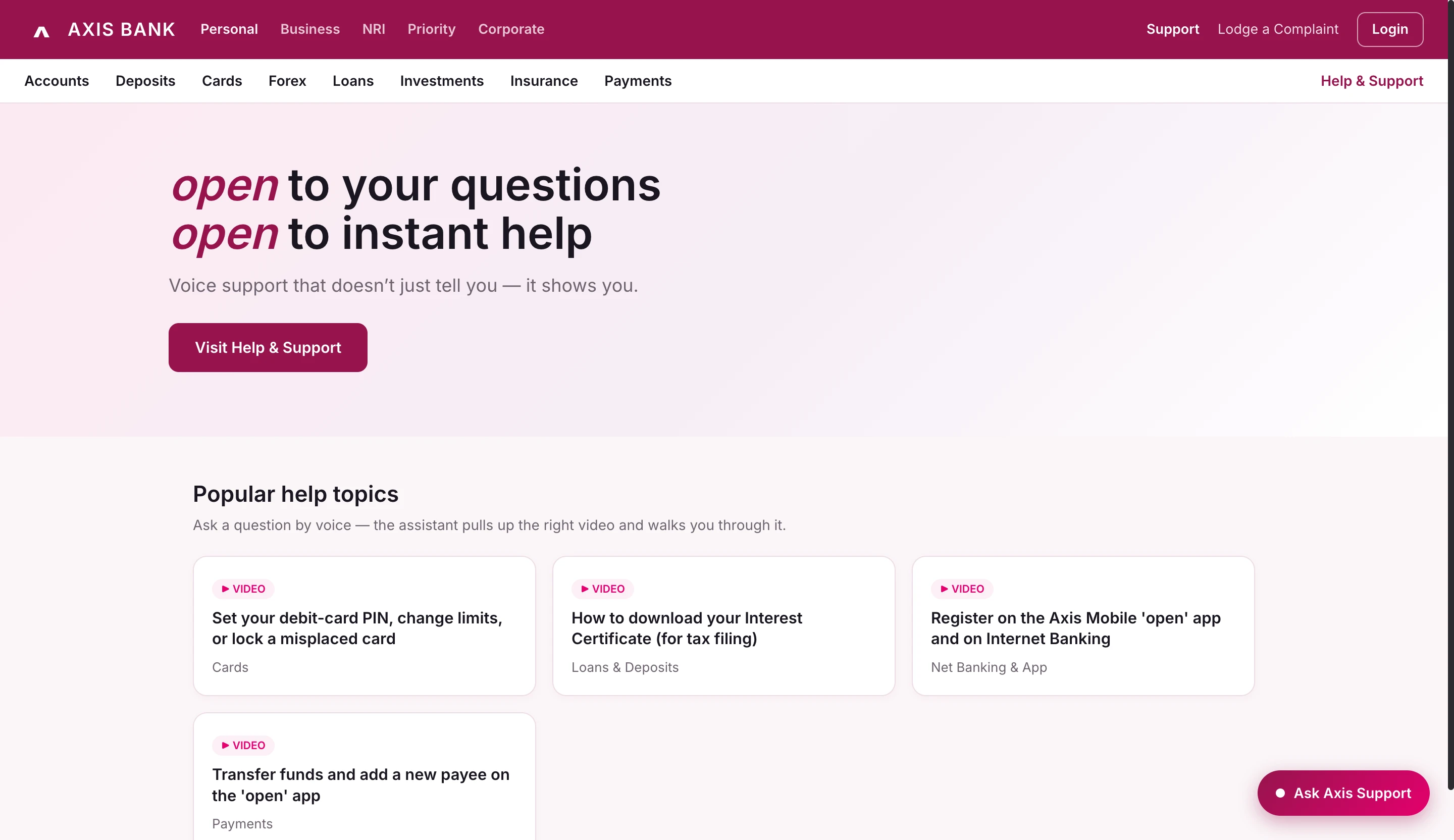
flagship For a bank, insurer, or any public site: the agent shows the how-to, signs the customer in securely, reads their account, and offers the right next product — reading the journey behind the question.
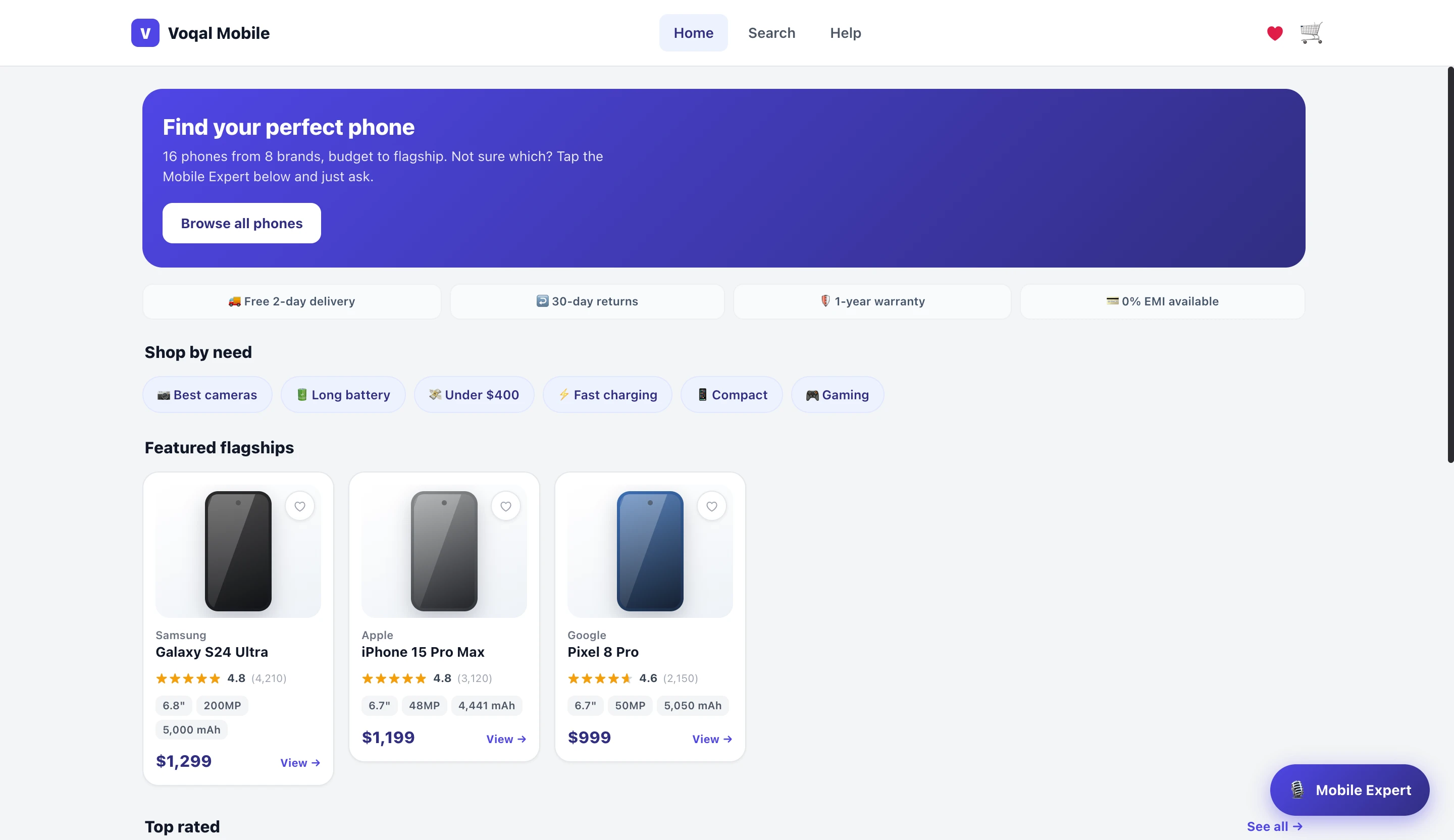
beta Add a snippet to your Shopify / Shopflo store. We ingest your catalog; the agent opens the product, highlights the spec, closes the sale — then handles the return. Nothing to build.
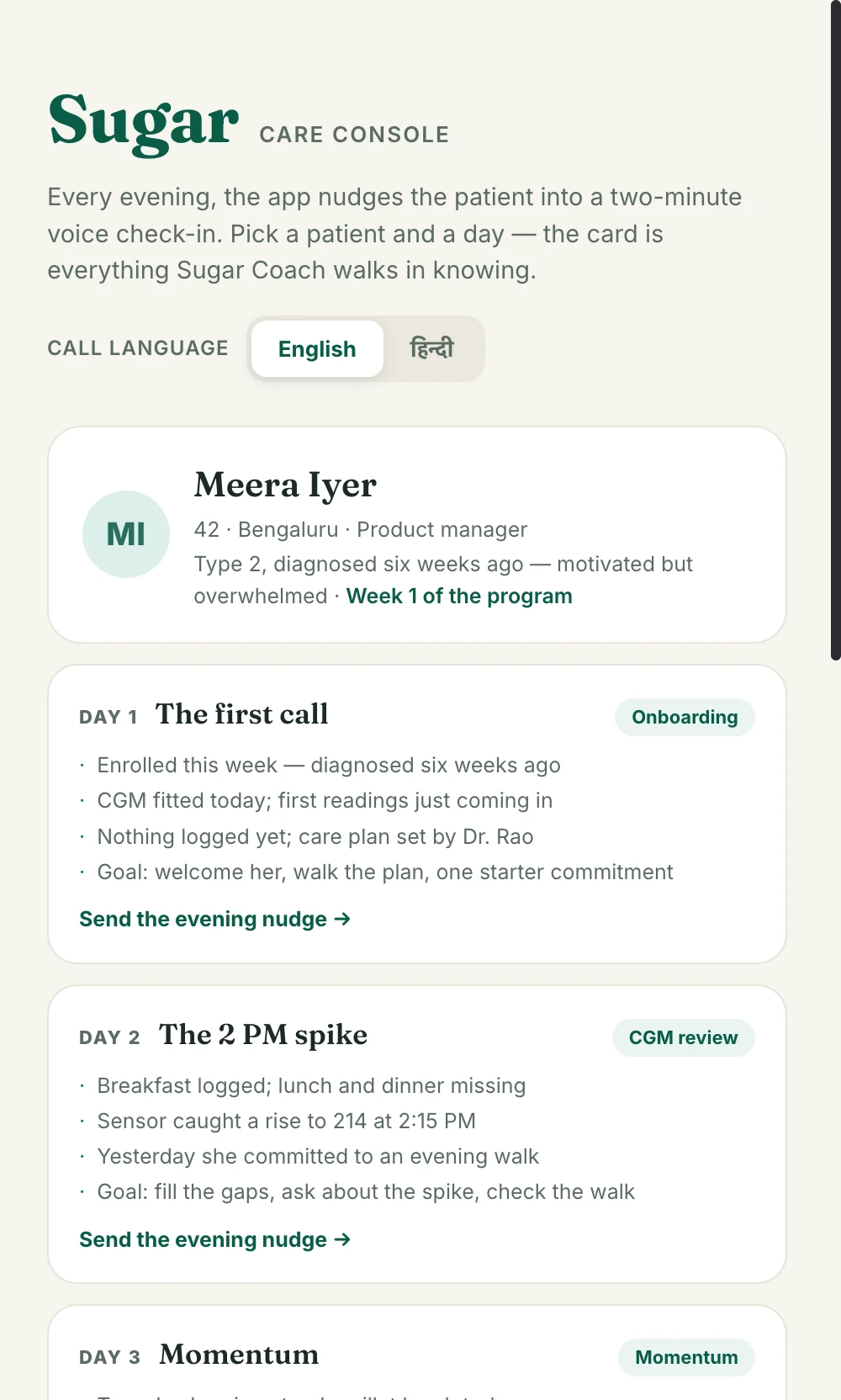
new A warm, context-aware check-in that begins from a notification, turns speech into structured data, correlates it to the numbers that matter, and holds a relationship over time.
A voice colleague on your internal console — it does the legwork, you keep control.
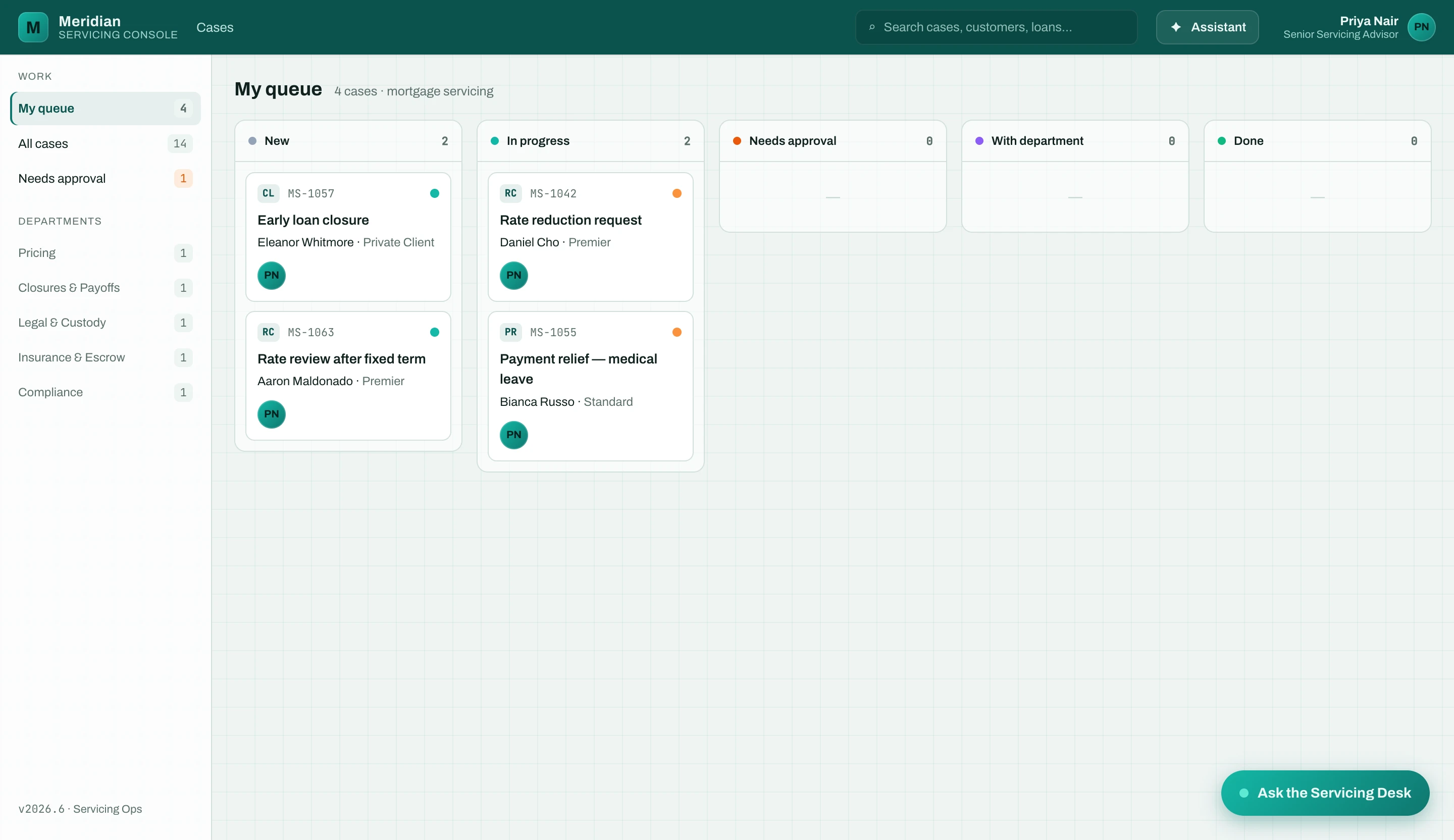
Because it runs inside your app, it knows exactly what's on screen. You expose the actions; the agent picks which to call, and when. Everything below is a real, live demo — not a mockup.
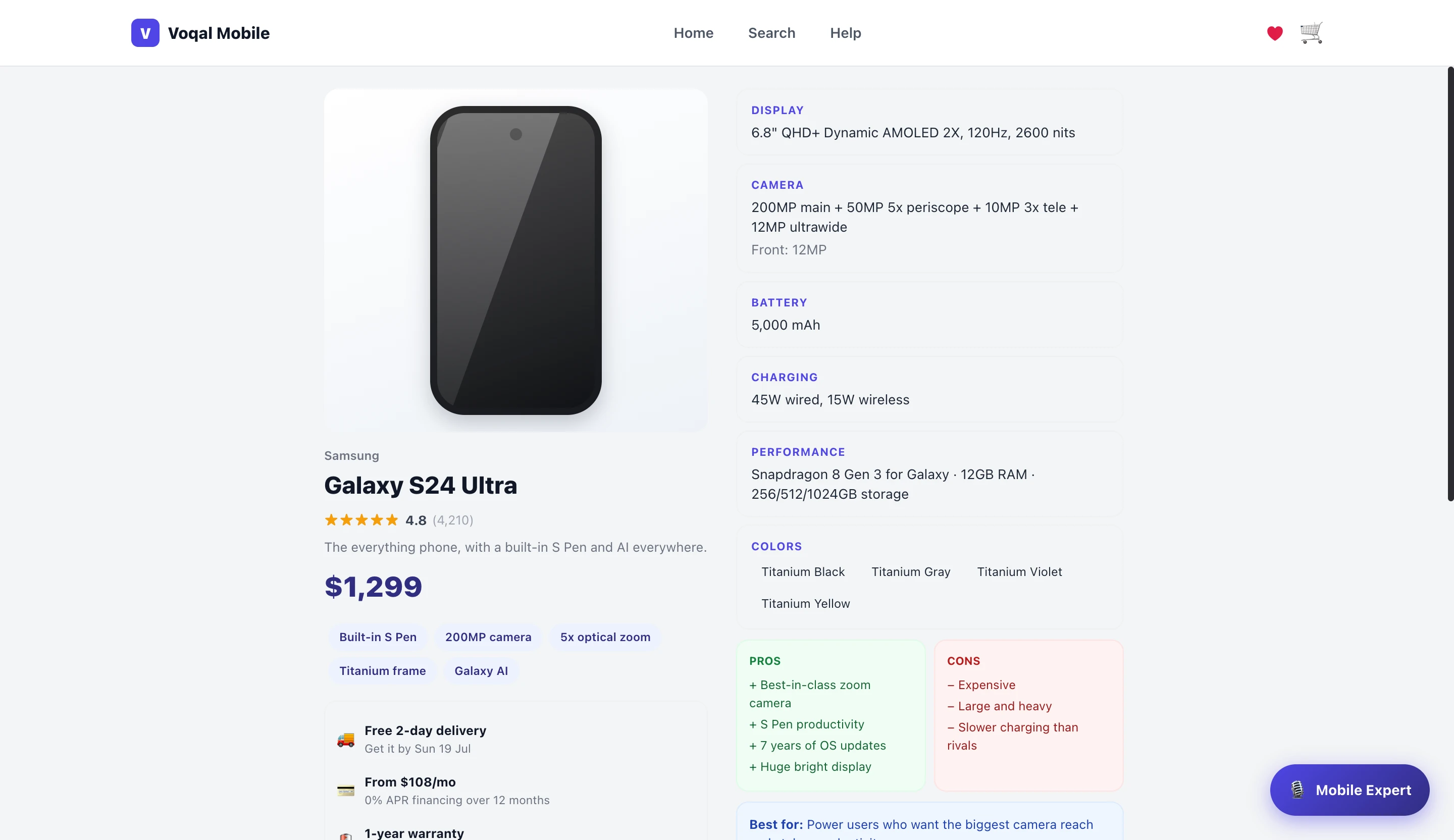
shows Ask for a good camera phone. It opens the product and puts the exact spec in front of you — while it talks, not after.
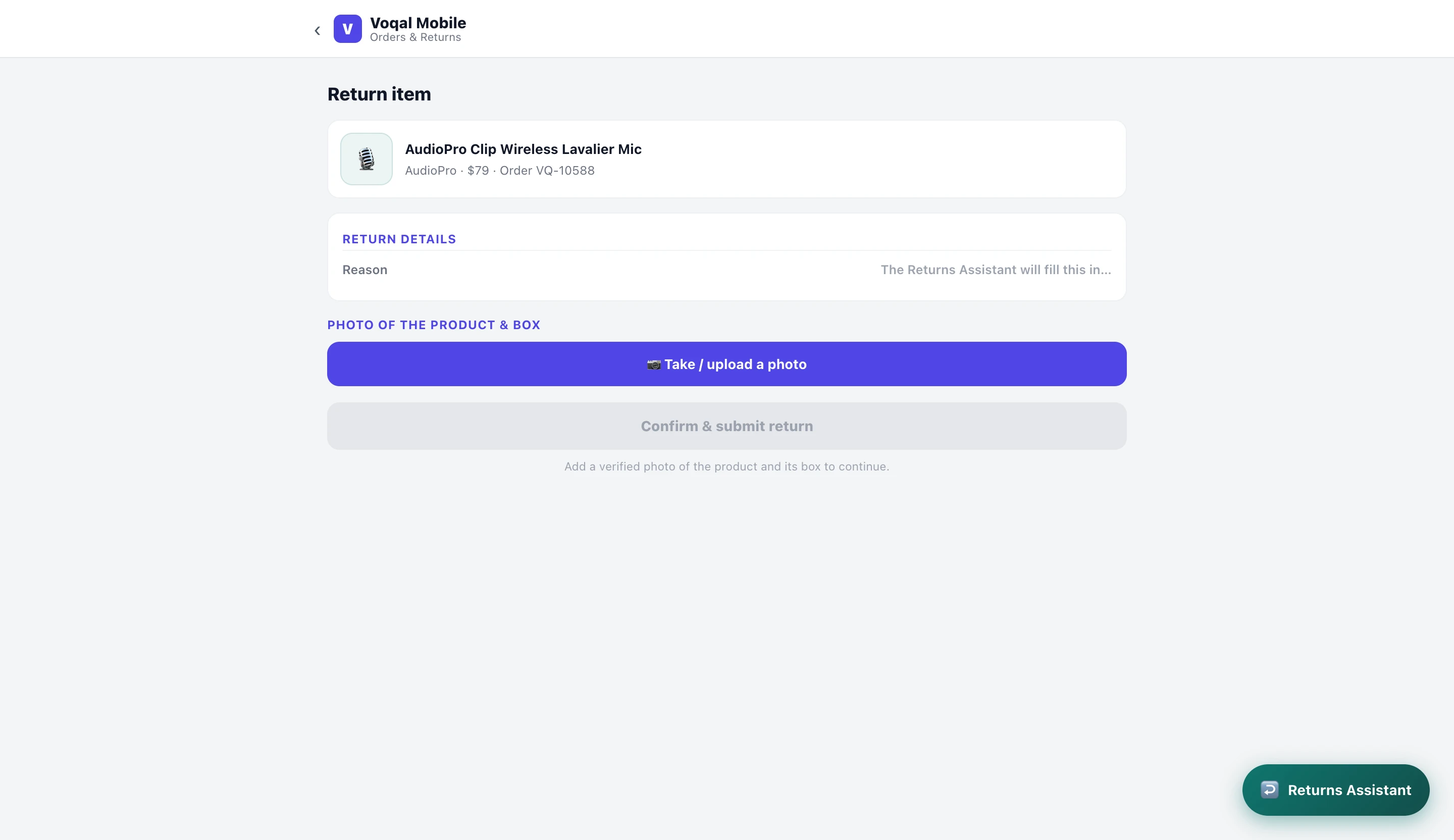
sees It asks for a photo of the product with its box, then looks — and confirms the box is in frame before the return can be submitted.
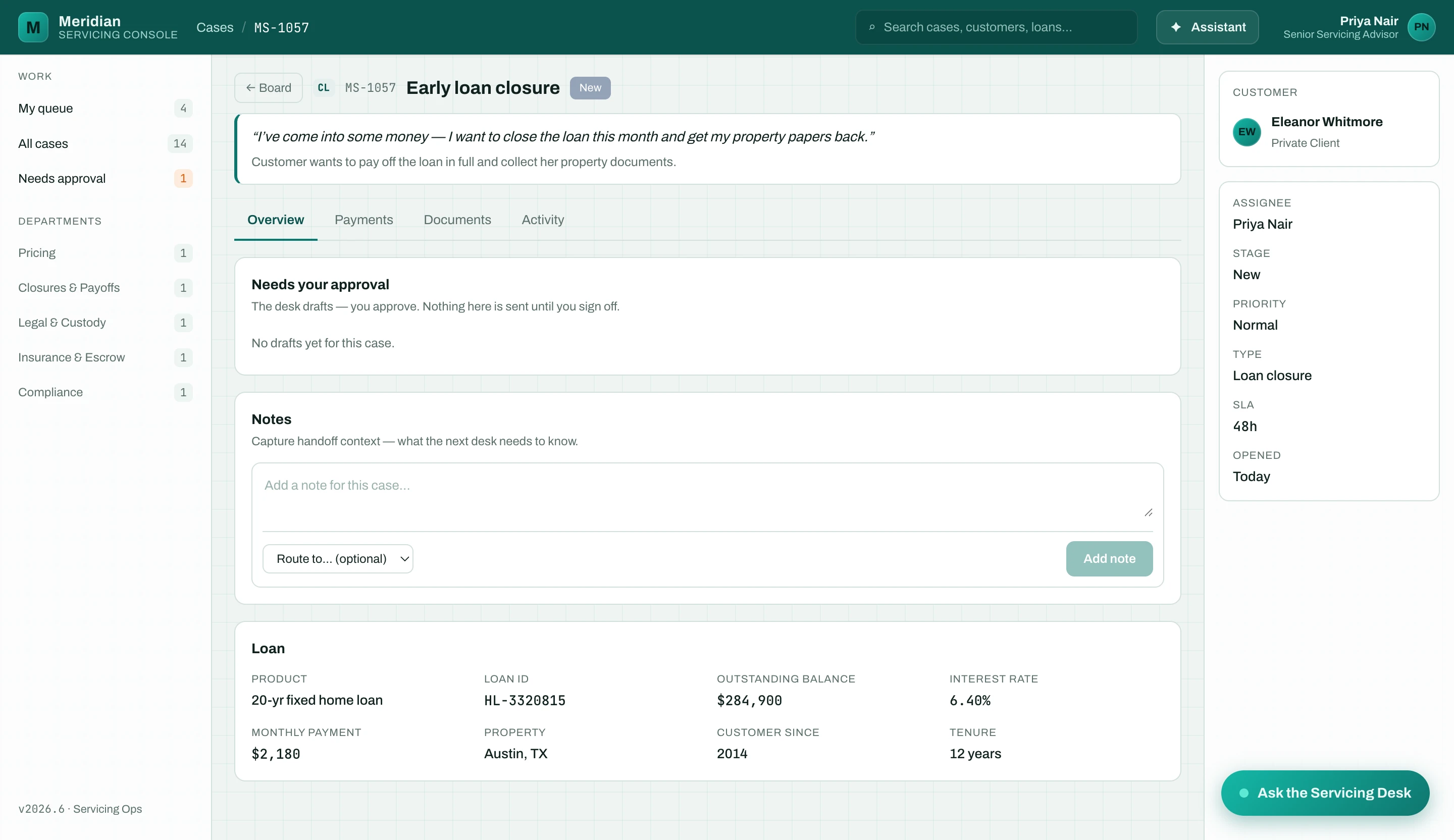
acts It drafts the regulated step and waits. Nothing is sent until a human signs off — and the server enforces it, not the prompt.
Seven agents you can talk to right now — each one runs on Voqalize, and most drive a real app's UI as they speak.
A voice assistant on a bank site: it opens the how-to, signs you in securely, reads your balance, and reads the journey behind the question to offer the right next product.
A mortgage-servicing copilot that works up a case in the background, reconciles the numbers, catches the blocker that gates a regulated step, and drafts for a human to approve.
Talk through dates, cities and budget — the itinerary builds itself on screen as you speak, flights and hotels searched in parallel in the background.
Ask for a phone by budget and need; the store filters, compares specs and drops it in the cart — on the screen, in real time.
The agent troubleshoots to deflect an unneeded return, pulls up your order, reads a product photo you show it, and fills the return form for you.
A daily diabetes check-in that starts from a notification, turns "curd rice and two rotis" into a logged meal with calories, and knows exactly where the clinical line is.
A gold-loan agent asks what it needs, checks eligibility on the spot, and switches to your language mid-call — native script and all. A chat, not a form.
Watch one turn cross the pipe: voice in, text to your agent, tool calls onto the screen — every message logged, in order, below.
Voice rides WebRTC to us; your backend opens one outbound WebSocket and keeps it. Events and UI actions flow both ways — your server never receives audio, and never opens a port.
Every demo above runs on a brain we host. When you want full control — your LLM, your prompt, your tools, your data in your own backend — your agent connects out to us over one WebSocket. We run the voice; nothing runs in our cloud that you didn't put there.
Brain of callbacks — no frames, no protocol plumbing./travel demo runs live over this path today.from voqalcloud import Brain, serve
class SupportBrain(Brain):
async def on_interaction(self, i):
ctx = your_db.context(i.session.id) # your data, local
async with i.inference() as inf:
async for chunk in your_llm.stream(i.transcript, ctx):
await inf.speak(chunk)
i.action("open_invoice", {"id": ctx.last}) # drive the UI
serve(SupportBrain, api_key="ak_...", cortex_url="wss://.../agent") STT and TTS are open-source models we run ourselves — so your audio goes to us, not a third-party voice vendor. They sit behind Deepgram-Flux– and Cartesia–compatible APIs, so speech client code you already have just works.
Voice-only platforms place and take phone calls. They can't see or touch a screen. Voqalize lives inside your app — it talks while it navigates, highlights and fills the UI.
Platforms that host the prompt call your tools over HTTP — every step is a network round-trip, and you expose & secure an endpoint for them. Here the LLM runs in your process; tool calls are local.
Underneath, our voice plane is pipecat + WebRTC — the same stack you'd self-host. They hand you a raw transport (RTVI, data channels) but no packaged pattern; you'd wire the tool-call → UI → state loop yourself. We ship that loop as the product — plus hosted speech.
Two ways in: pick a solution and we'll set it up with you — or grab an API key and bring your own brain.